Along the meandering banks of the Jalangi River in Nadia, morning mist still clings to the courtyards of Ghurni, carrying the comforting aroma of wet alluvial soil mixed with sun-baked straw. This is no mere neighbourhood on the northern fringes of Krishnanagar; it is a living crucible of tactile history. For generations, the families of potters and sculptors here have practiced an idiom of realism that transforms inert earth into human emotion, cementing the legacy of Krishnanagar clay dolls Ghurni artisans across the global cultural landscape.
The Heritage of Ghurni: Roots of Krishnanagar's Clay Artistry
The genealogy of Ghurni’s craft traces back to the late 18th century during the reign of Raja Krishnachandra Roy, a patron of arts and literature who invited master potters from Dhaka and Natore to settle in his domain. These artisans initially crafted modest ritual items and basic household pottery. Soon, however, their exceptional dexterity caught the royal eye, encouraging them to pivot toward portraiture and minute human anatomy.
Walking through the narrow lanes of Ghurni today, one steps past open verandahs where families sit shoulder to shoulder—grandfathers guiding grandsons with the meticulous patience passed down through centuries. The craft survived the shifting tides of British colonial rule, earning international acclaim at the Great Exhibition in London in 1851, where Krishnanagar's miniature clay dioramas astonished European connoisseurs with their startling lifelike precision.
From Mud to Masterpiece: The Intricate Process of Sculpting
The creation of a Ghurni masterwork defies industrial shortcuts. It is an intimate, meditative dialogue between the sculptor and the soil. The primary medium is locally sourced, fine-grained river clay known locally as bele mati or pank mati, harvested meticulously from the bed of the Jalangi.
- Armature Construction: Artisans construct a sturdy skeletal frame using bamboo slivers, straw, and iron wire to bear the weight of the wet mud.
- Layering and Modeling: Successive layers of clay are applied, beginning with coarse mud and finishing with a hyper-refined top layer mixed with tamarind seed paste to prevent cracking.
- Detailing and Expression: Using bamboo styluses, copper needles, and their bare fingers, the artisans carve microscopic details—the furrow of a farmer's brow, the delicate drape of a Dhakai muslin sari, or the crinkles around a laughing child's eyes.
- Firing and Pigmentation: Once sun-dried, the figures are fired in traditional cow-dung kilns, then painstakingly hand-painted using natural earth pigments and water-based colors, often finished with a coat of lac for durability.
"Clay is never just mud in Ghurni; it is unwritten poetry waiting for the sculptor's thumb to awaken its heartbeat."
Capturing Bengal Life: Famous Works and Living Traditions
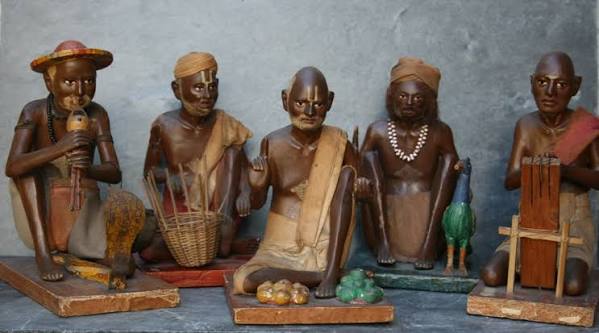
What distinguishes Ghurni’s output from mass-produced terracotta is its profound sociological observation. The artisans do not merely sculpt gods and goddesses; they immortalise the ordinary denizens of Bengal's social fabric. You will find miniature tableaux depicting a weary village postman cycling down a dusty red-dirt road, a weathered fisherman hauling his morning catch from the Hooghly, a bustling rural marketplace complete with weighing scales and haggling housewives, or a traditional baul minstrel strumming his dotara under a banyan tree.
These vignettes serve as visual anthropology. Over decades, master sculptors like the late Kartik Chandra Pal and contemporary Padma Shri awardees have pushed the boundaries of miniature realism, creating sculptures so detailed that viewers often lean in close, expecting the figures to draw breath. Pausing at a local tea stall in Ghurni for a steaming cup of lal cha while watching a craftsman paint the eyes of an old village matriarch reminds one that art here is not locked behind museum glass—it breathes in the damp air, tied irrevocably to the soil of Bengal.