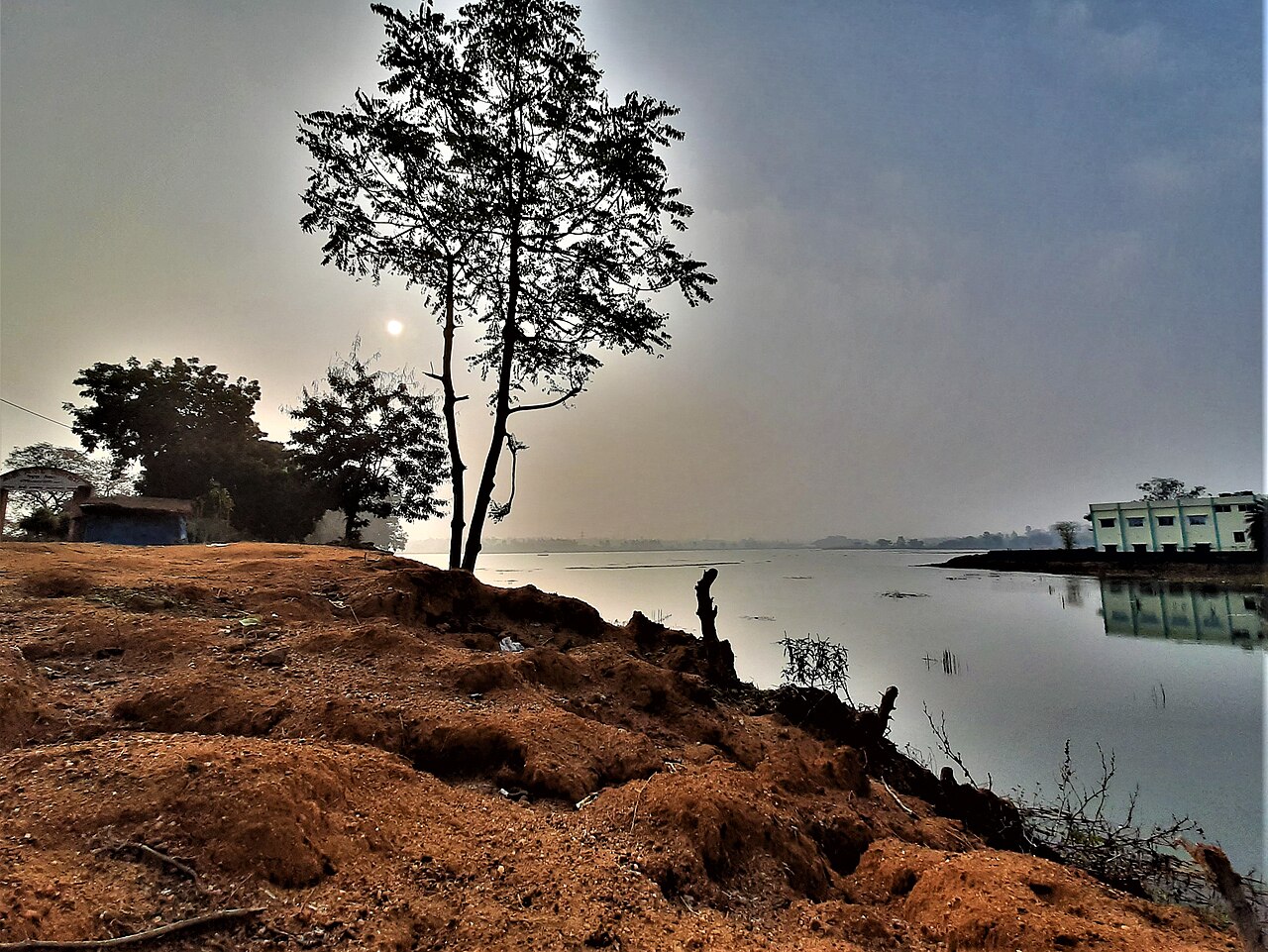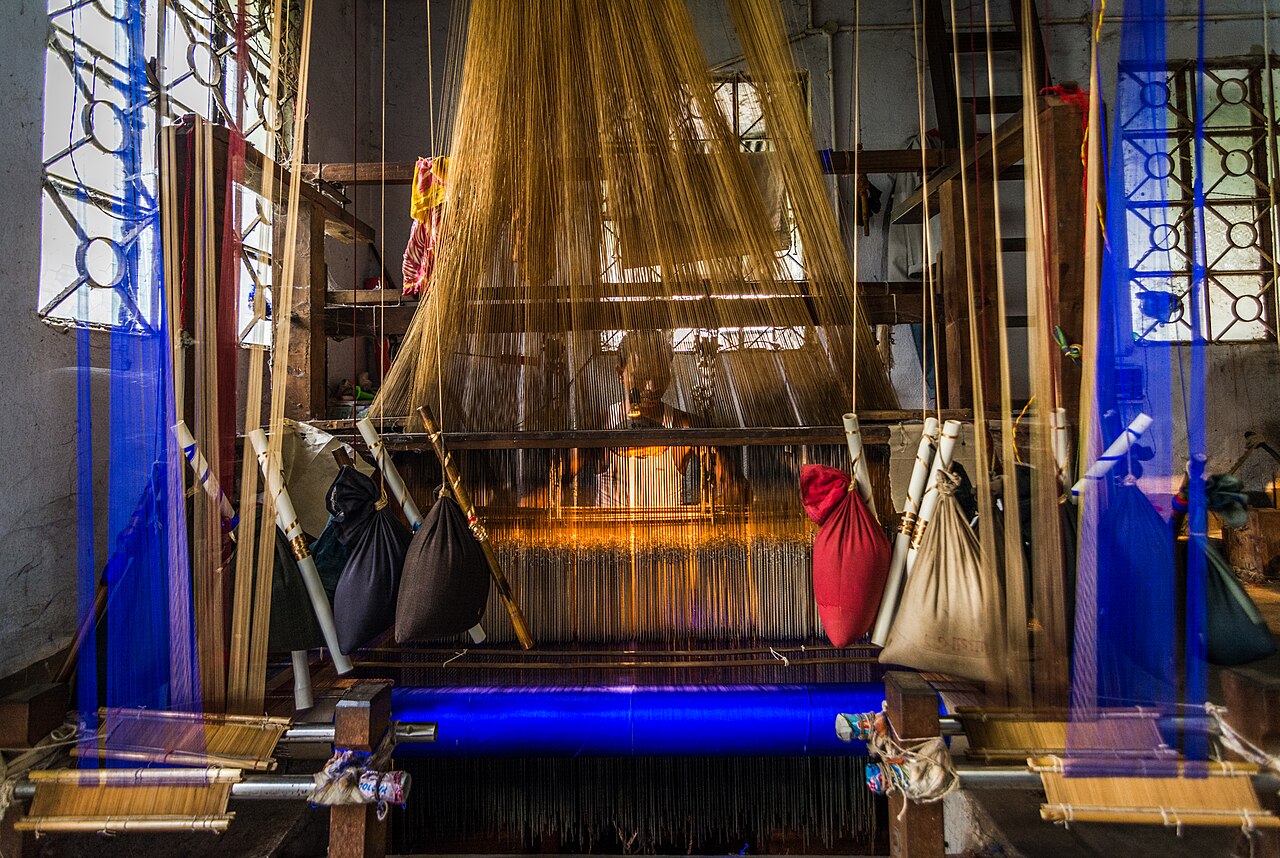
In the quiet alleyways of Panchmura and Madanmohan Para in Bishnupur, the rhythmic clack-clack of wooden jacquard looms marks the persistence of a centuries-old tradition. Long before the era of power looms and synthetic dyes, the red-soil plateau of Bankura bore witness to the birth of a textile unlike any other. Here, pure Mulberry silk transforms into a canvas of cultural narrative, carrying the heavy weight of Bengal's terracotta temples onto the pleats and pallus of the legendary Baluchari saree.
The Historical Roots of Baluchari Silk in Bishnupur
The lineage of Baluchari traces its origins back to Baluchar, a small village in the Murshidabad district, situated on the banks of the Bhagirathi. Patronized by the Nawabs of Bengal, particularly Murshid Quli Khan, the craft flourished under royal patronage. However, when a devastating flood altered the course of the river and submerged the village, the master weavers were forced to migrate. They found a new home in Bishnupur under the benevolent rule of the Malla kings, whose distinctive terracotta architecture—exemplified by the Rasmancha and Madanmohan Temple—shared the same preoccupation with intricate storytelling.
In Bishnupur, local artisans adapted the craft, marrying the flowing narrative style of Malla terracotta panels with heavy silk weaving techniques. Today, clusters across Bankura sustain this heritage, transforming raw Mulberry cocoons sourced from Malda into regal drapes that echo the grandeur of the Malla dynasty's golden age.
Decoding the Mythological Epics Woven on Silk
What sets a genuine Baluchari silk saree Bishnupur Bankura apart from ordinary textiles is the meticulous depiction of epics. The pallu—the decorative end piece—traditionally serves as a grand mural, chronicling episodes from the Ramayana, the Mahabharata, or the Puranas. One can trace the dramatic lineage of the Kurukshetra war: Arjuna holding the Gandiva, Krishna imparting the Bhagavad Gita on his chariot, or Lord Rama returning victoriously to Ayodhya.
Flanking these central panels are smaller, repeating motifs known as kalka or paisley, alongside depictions of royal court scenes, horse-riders, and even modern adaptations of figures smoking hookahs, reflecting the socio-cultural life observed by colonial-era weavers. Every single human figure, animal, and celestial chariot is meticulously rendered using supplementary warp and weft techniques, ensuring the reverse side of the fabric remains as clean as the front.
The loom is not merely a tool for production in Bankura; it is a chronicler of time, translating sacred Sanskrit verses into tactile, shimmering threads of gold and crimson.
The Craftsmanship and Weaving Process of Bankura Looms
Creating a single authentic Baluchari saree is an exercise in immense patience, often taking anywhere from two weeks to several months depending on the complexity of the design. The process begins with raw silk yarn being boiled in soapy water to remove sericin, followed by dyeing in vibrant, fast colors—historically deep maroons, forest greens, indigo blues, and burnt oranges.
Before a single thread is thrown onto the loom, the master artisan—the karigar—draws the mythological motifs on graph paper. This design is then translated onto perforated jacquard cards. As the weaver steps on the wooden pedals, these cards dictate the lifting of warp threads, allowing colored extra-weft threads to interlock and form the elaborate mythological tableaus. Purchasing an authentic piece directly from the weavers' cooperatives near Gumgarh Gate ensures that this painstaking heritage survives against the tide of cheap commercial knock-offs.